
Judge
Lisa Goodwin-Allen
“People who work for you are really important. You've got to be able to pass on knowledge, keep them energised, keep them learning so they to develop, so they'll stay with you and you create this amazing team or bond. ”

Northcote
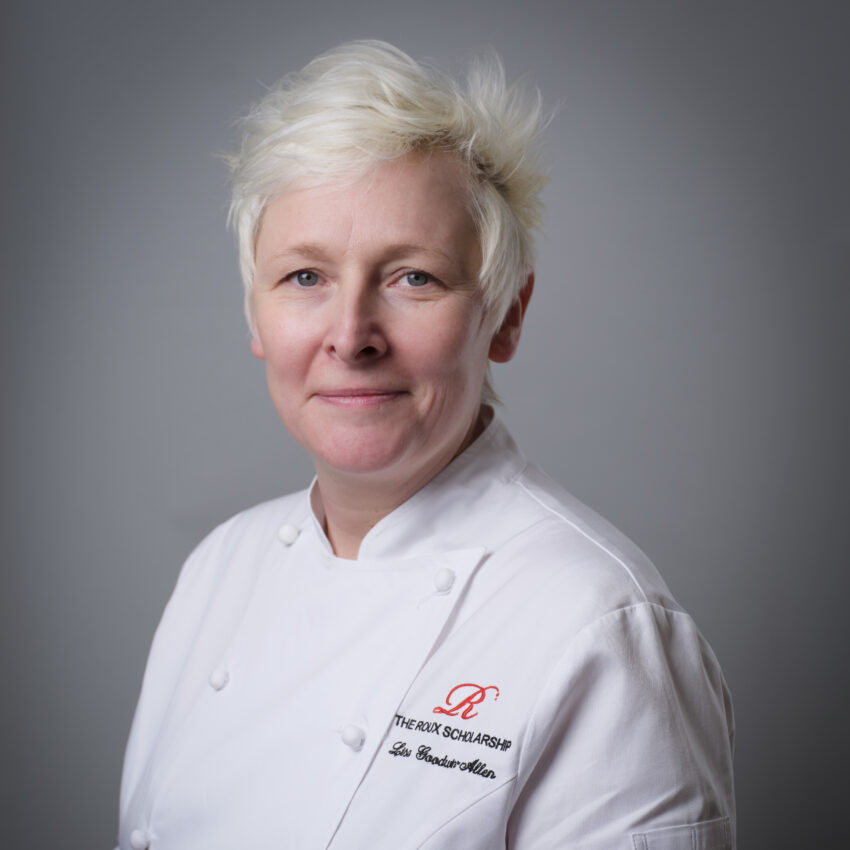
Lisa Goodwin-Allen is Chef Patron-Director at Northcote Hotel and Restaurant in Lancashire’s Ribble Valley, and Culinary Director of The Beaumont in Mayfair, London.
Born in Lancashire, Lisa became interested in cookery at school and enjoyed the opportunity to be creative and express herself. Her culinary career began at Lancaster & Morecambe College. After graduating, she worked in several prestigious restaurants, including the Michelin-starred Le Champignon Sauvage in Cheltenham, before arriving at Northcote aged 20.
After just a year, Lisa became chef de partie, then junior sous chef the following year. Then, at the age of 23 was named head chef, one of the youngest chefs to take on the role in a Michelin-starred kitchen at the time. In 2006 and 2007, she competed in The Roux Scholarship and gained a place in the national final both times.
Northcote won its Michelin star in 1996 and the restaurant has held it continuously ever since. This is largely due to Lisa’s talent and passion for using seasonal and locally sourced ingredients, which allows her to incorporate her Lancashire identity into her dishes. She works across the whole kitchen: managing the team, developing new dishes, handling the ins and outs of the commercial side of the kitchen, and creating a passionate and positive place for the brigade to work.
Lisa is a regular on TV, too. She is often seen as a guest on James Martin’s Saturday Morning and BBC Morning Live and has judged and mentored on both MasterChef: The Professionals and Celebrity MasterChef. However, she is perhaps best known as one of the veteran judges on BBC1’s Great British Menu.
In November 2024, Lisa became the first celebrity female chef to head up the culinary experience for guests at Allianz Stadium's Twickenham’s luxurious East Wing and earlier in the year she made her debut at Royal Ascot at the Queen Anne Enclosure’s flagship Fine Dining Restaurant, where she returned in 2025. Among her many accolades, Lisa was named 2023 Food & Travel Reader Awards Chef of the Year; 2022 CATEY Chef of the Year and won the AYALA SquareMeal Female Chef of the Year Award 2022.
Lisa is dedicated to supporting up-and-coming chefs throughout the industry, and she invests much time in training the Northcote brigade to teach new skills, get them excited about ingredients, and to continually move the brigade forward. Lisa is a Fellow and Northern Chair of the Royal Academy of Culinary Arts. In 2022 and 2023, Lisa was chair of judges for the Craft of Guild Chefs Young National Chef of the Year, saying at the time of taking the role that she wanted to really inspire young chefs to look at the quality of ingredients and flavour and tell a story of who they are with their dishes.
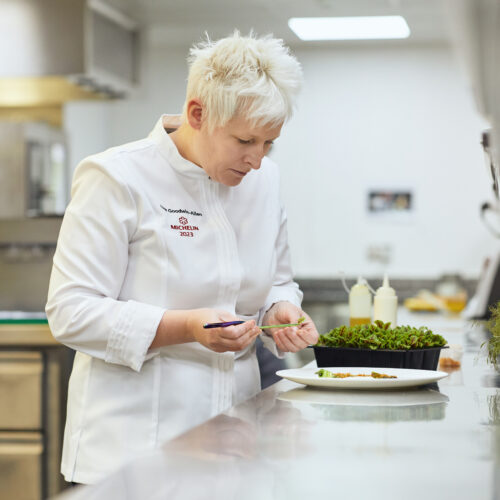
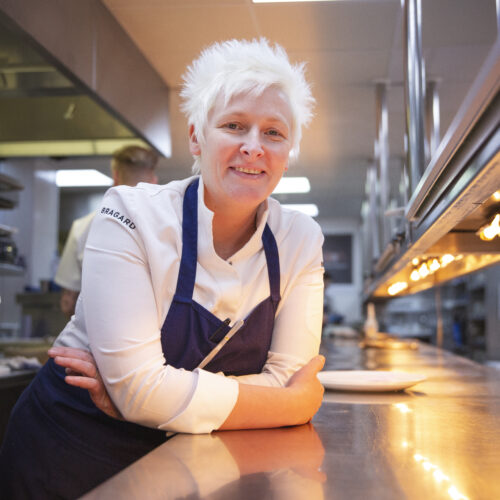
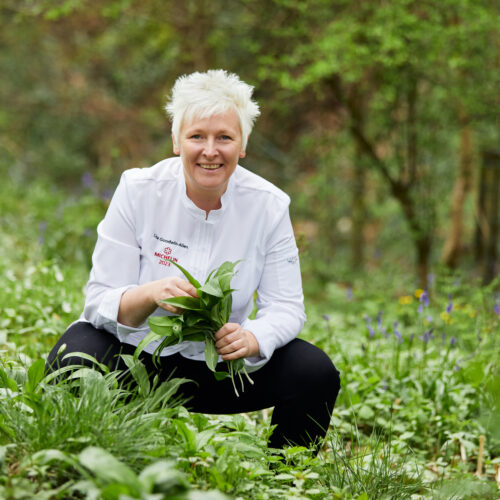
What do you remember about taking part in The Roux Scholarship?
I took part such a long time ago but the memory of it sticks in your mind, because it’s such a prestigious competition to be part of. For the 2007 competition, I went to Birmingham for the cook off and then we were at the Mandarin Oriental for the final. It was quite daunting sitting there in that room with the judges walking in and telling you the dish you were gonna cook. It was an honour to cook one of the legendary Roux dishes. One of them was a coulibiac [of salmon and sea bass] with beurre blanc.
Why do you think it's important to know the classic French skills?
It’s a grounding, you learn how food is developed and comes together. That’s the amazing thing about food, these are the skills we all learn when we’re younger but, as we travel and move on through life, we learn new techniques and new ways to do things; that’s how you learn your craft. Say you’ve got ten people in a room and you ask them all to do a beurre blanc, everyone would do it completely differently. That’s how every restaurant is different and every chef is different because we take all these classics and things that we learn along the way, and develop them into our own styles.
Why is it important to keep on learning and developing as a chef?
For me, The Roux Scholarship was an opportunity to see what I could learn, to develop my own skills and to push it as hard as I could. I’m always learning and developing; that’s why I've stayed at Northcote so long. I've always been pushed and have always developed; we moved from a small restaurant with rooms, to a small boutique hotel, we doubled in size in rooms and the kitchen got bigger, the kitchen brigade started as eight people, now it’s 28, we opened a cook school. I love to learn, I love to get my hands into new things you know. Now I’ve come back to Northcote we are developing it but, equally, I'm the culinary director of the Beaumont in Mayfair, which we just opened. I’ve done that because it develops me as a person, and I’m developing a team as well, because you know that's what it's all about. That’s the big thing with The Roux Scholarship: you’re keeping developing people and making a legacy. People who work for you are really important you've got to be able to pass on knowledge, keep them energised, keep them learning so they to develop, so they'll stay with you and you create this amazing team or bond.
Part of the application for the Roux Scholarship is to do costings for the recipe. What advice would you give for people having to do that for the first time?
It's not an easy thing but it's important that you’re transparent and that you're teaching your brigade about what prices are. At Northcote we put up boards in the kitchen, daily boards, and we break down what each piece of meat cost us, what each piece of fish cost us, what the vegetables cost us. I'm a big believer that everyone in the kitchen, from the youngest one to the most senior one, should know how much those cost. It's actually massively important to show respect for the ingredient in its quality, and its price. Sometimes when you put a recipe together, you'll think ‘Oh my God how much does that sauce actually cost?’. It’s important, when you’re creating dishes, to always realise how much things cost, as it can ramp up quite quickly.
How do competitions help chefs and brigades to develop?
I like to encourage my chefs to enter competitions. Whether they win them or not, it gives them confidence, it gives them experience and it opens up opportunities and it develops them. I did Young Chef & Waiter, and The Great British Menu, and many different competitions like that. Now I have the pleasure of judging them. I was head judge for Young National Chef of the Year (YNCOTY) for two years and that was incredible. I’ve also had two winners in the Young National Chef; I give them a lot of time and development to be able to you know go in there and be their best.
What mistakes have you seen young chefs make in these competitions?
You really need to read the exam question, or the brief carefully, because every competition is different. For the first round of The Roux Scholarship, they want you to be yourself, they want to know who you are, so your recipe needs to show flair and creativity but also it has to show that you can actually deliver it on the day. Some people might go overboard, make it too complicated. Actually, what we're wanting to see is a delicious plate of food with your DNA stamped all over it. So use as much of the ingredients as possible, but less is more. As I’ve got older, I’ve realised, sometimes, it’s about showing a different technique with the same flavour on a plate, rather than putting another flavour onto the dish.
How does it help the rest of the brigade when you've got chefs competing in competitions?
There might be some chefs who are a bit timid, and a bit daunted and they think ‘Oh I can't do that’ but when they see a colleague come back and they hear about their experience, it encourages them and they think ‘I wanna do that next year’.
The Northwest has developed a really dynamic culinary scene. How does it feel to be one of the pioneers there?
I think it's amazing, what the region can offer just now is incredible. We’ve got Mark Birchall, who has built something there that is very special. It just proves that you don't have to be in the centre of London, you can be from up and down the country. I think over the years that’s changed; it used to be so dominated by London, but now you know you got all these amazing places up and down the country.
How do you feel about joining the judging panel?
I'm overjoyed, it’s a massive honour for me to be honest. I was quite taken back when I got the e-mail. The Rouxs are the giants of the industry, they’re pioneers, from their fathers and now Alain and Michel. I have so much respect for them, for what they've created within the industry. It’s such a massive experience for someone to go on and win it and be under their wing.